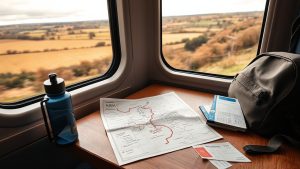
You’re sitting at the gate, boarding pass in hand, watching groups of friends laugh over overpriced sandwiches. It hits you quietly: nobody is coming with you. No one will remind you where the passport is, no one will split the taxi, no one will notice if you walk the wrong way for twenty minutes. That feeling isn’t a warning sign. It’s just the sound of a trip becoming entirely yours.
Most of the anxiety around going alone comes from the unknown, not from real danger. The fix isn’t bravery. It’s a plan. Below is the expert advice on solo travel I wish someone had handed me before my first flight alone: what to sort out before you leave, how to handle arrival day, how to build daily routines that keep you grounded, and how to enjoy a meal by yourself without staring at your phone the whole time.
Before You Go: The Prep That Does the Heavy Lifting
Confidence on the road is mostly built at home. The more decisions you make in advance, the fewer you have to make when you’re tired, jet-lagged, or standing on a dark street with a dead phone.
Start with your documents. Photograph your passport, visa, insurance details, and any booking confirmations, then store them somewhere you can reach without data. A screenshot folder works fine. Email a copy to yourself and leave one with someone at home. If your passport disappears in a city where you don’t speak the language, having a photo of it turns a catastrophe into an inconvenience.
Then think about money in layers. Carry a small amount of local cash for the first day, a card that works abroad, and a backup card kept in a different bag. Don’t keep everything in one pocket. This isn’t paranoia; it’s just good logistics. You’d do the same thing at home before a long weekend.
Accommodation matters more when you’re alone. For a first solo trip, book the first two or three nights somewhere with a 24-hour reception, even if it costs a little more. Arriving at midnight to a self-check-in apartment with a broken keypad is a bad way to start. Once you’ve found your feet, you can move to cheaper or quirkier places. A hostel with a private room is often the sweet spot: your own door, but a common area downstairs if you want company.
Learn a handful of phrases in the local language. Please, thank you, sorry, I don’t understand, and where is the bathroom. That’s five phrases. They won’t make you fluent, but they change how people respond to you. Being a polite stranger beats being a silent one.
Finally, tell someone your rough itinerary. Not a minute-by-minute schedule, just the cities and dates. Then agree on a check-in rhythm, maybe a message every couple of days. It gives the people who worry about you something concrete, and it gives you a reason to look up from your own trip for a moment.
Arrival Day: Lower the Bar and Get Your Bearings
Arrival day is the hardest day. You’re disoriented, you smell like an airplane, and every small problem feels enormous. Treat this day as a logistics day, not a sightseeing day. Your only job is to get to your accommodation, eat something, and learn the immediate area.
At the airport or station, sort out your transport before you leave the building. If you’re taking a taxi, use the official rank or a licensed app rather than accepting a ride from someone who approaches you inside the terminal. If you’re taking public transport, buy the ticket at the counter or machine, and confirm the direction with a staff member. This is the one moment where asking twice is completely reasonable.
Once you’ve dropped your bags, walk a loop around your neighborhood. Find the nearest grocery store, pharmacy, and a place to eat. Note the streets that feel busy and well-lit. You’re not doing anything dramatic here; you’re just giving your brain a map. Anxiety shrinks when the environment becomes familiar, and familiarity comes fast.
Eat close to where you’re staying on the first night. You don’t need a memorable meal. You need calories, water, and sleep. The memorable meals can start tomorrow, when you’ve had eight hours of rest and your sense of direction has returned.
One practical habit: keep your accommodation’s address written down on paper or saved offline. If your phone dies or the network drops, you can still show a taxi driver where you’re going. It’s a small thing that removes a whole category of stress.
Daily Routines That Keep You Steady
The middle of a solo trip is where the magic and the loneliness both live. A few simple routines keep the balance tilted toward the good part.
Start each day with a plan that has room in it. Pick one or two things you actually want to do, then leave the rest open. Overpacked itineraries are how solo travelers burn out, because there’s no one to talk you out of the fifth museum when you’re already tired. Under-planned days are how you end up scrolling in a cafe wondering why you came. One anchor activity plus free time is the sweet spot.
Check in with yourself the way you’d check in with a friend. Are you hungry? Thirsty? Tired of crowds? Solo travel makes it easy to ignore your own signals because no one else is noticing them either. Stop for water. Sit down when your feet hurt. Leave the market when the noise gets to be too much. Nobody is keeping score.
Stay reachable but not glued to your phone. Share your location with someone you trust for the duration of the trip. Keep your phone charged, and carry a small power bank. A dead phone in an unfamiliar city is the single most common way a manageable situation turns stressful.
Trust your instincts, and act on them early. If a street feels wrong, turn around. If a person’s questions feel off, end the conversation politely and walk toward other people. You don’t owe anyone an explanation for choosing a different route. Most people you meet will be kind and helpful, but the point of instinct is that it costs you nothing to listen to it.
Build in one low-key evening every few days. Cook something simple, watch a film, call home. Solo travel doesn’t have to be a highlight reel. The quiet nights are what make the busy days sustainable.
Eating Alone Without the Awkwardness
Dining solo is the hurdle most first-timers dread, and it’s usually the thing they end up loving most. The awkwardness is real for about ten minutes, and then it’s gone.
Start with lunch. Lunch is a low-stakes meal. Cafes and markets are full of people eating quickly and paying attention to their own food, not to you. Once lunch alone feels normal, dinner alone is a short step.
Choose your seat with intention. A spot at the counter or facing the room gives you something to look at and makes the space feel less exposed than a table for two in the middle of the floor. If the restaurant is quiet and you’d rather not be the only solo diner, go a little earlier or later than the rush.
Bring something to do, but don’t hide behind it. A book, a notebook, or a map you’re studying works well. Headphones in both ears the whole meal, though, signals don’t talk to me to everyone, including the staff who might otherwise chat. Keep one ear free and see what happens. Some of the best conversations of a solo trip start with a waiter asking where you’re from.
Order what you want. This sounds obvious, but solo travelers often shrink their orders to seem less demanding. You’re a paying customer at a table for one. Order the full meal, take your time, and leave when you’re done.
If you’d rather not eat out at all some nights, that’s fine too. A picnic in a park, a takeaway eaten on a bench with a view, or a simple meal at your accommodation are all legitimate ways to eat on the road. The goal isn’t to prove anything. It’s to be fed and comfortable.
Solo Travel Questions First-Timers Ask
Is solo travel actually safe?
For most destinations and most travelers, yes, with the same basic caution you’d use in any unfamiliar city. The key differences are that you have no one to share decisions with and no one to notice if something’s off. That’s why the routines above matter: offline copies of documents, layered money, a charged phone, and a willingness to leave a situation early. Preparation replaces fear with competence.
How do I handle loneliness on a solo trip?
Expect it, and plan for it. Loneliness usually shows up in the evening, so schedule something gentle for that window: a call home, a walk, a meal you’re looking forward to. Day tours, cooking classes, and walking tours are easy ways to spend a few hours with people without committing to a whole day. And remember that a bad hour doesn’t mean a bad trip.
What should I do if something goes wrong?
Slow down and solve one problem at a time. Most issues, a missed train, a lost item, a closed attraction, have straightforward fixes. Use the resources around you: reception staff, station information desks, and your own saved documents. If you feel genuinely unsafe, get to a public, busy place and ask for help there. You are more capable in these moments than you think.
How do I choose a first solo destination?
Pick somewhere with reliable transport, a decent tourism infrastructure, and a language you can at least partly navigate. A place you’ve already visited with others is also a smart first choice, because the unfamiliarity is lower. Save the harder destinations for when the solo habit is established and your confidence has some mileage on it.