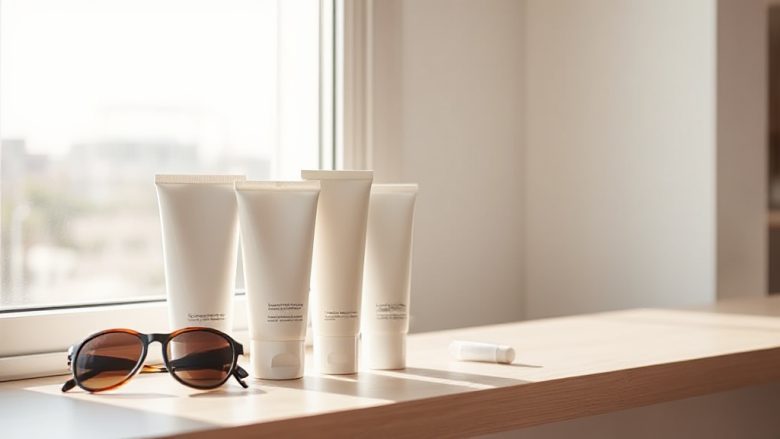
Stand in the sunscreen aisle for two minutes and you will see forty bottles shouting at you. Fifty SPF. Seventy. Mineral. Chemical. Water-resistant. Sport. Baby. Glow. Matte. Reef-safe. Tinted. The labels are designed to make you freeze, because a frozen shopper buys the most expensive bottle or the one with the prettiest packaging. Neither of those things protects your skin better than the others.
Here is the honest truth, and it is the reason this article is short: for most people, how to choose the right sunscreen comes down to three questions. Your skin type, how much sun you actually get on a normal day, and whether you can stand the finish enough to wear it every morning. Answer those three and you can walk out of the aisle in under five minutes with a bottle that works.
Everything else on the label is secondary. SPF numbers above 50 add almost nothing. “Sport” usually just means it clings harder. “Glow” often means shimmer. None of that matters if the bottle sits in a drawer because you hate how it feels.
Question 1: What is your skin actually like?
Skin type decides the texture and the ingredient list more than anything else. Get this wrong and you will either break out, flake, or look like a greased doughnut by lunchtime.
Oily or acne-prone skin. Look for gels, fluids, and lightweight lotions labeled non-comedogenic. These usually dry down to a matte or natural finish and sit well under makeup. Chemical filters tend to be thinner here. If a bottle says “rich” or “nourishing,” put it back. You want something that disappears within a minute of rubbing it in. Zinc-heavy mineral formulas can work, but older ones leave a heavy film that traps oil and feels worse as the day goes on. Modern sheer zinc formulas are better, though they cost more.
Dry skin. You can handle creams and lotions with glycerin, hyaluronic acid, or ceramides. Mineral formulas actually suit you, because the zinc and titanium dioxide sit on top and don’t strip anything. A moisturizing sunscreen can replace your morning moisturizer entirely, which saves a step and reduces the chance of pilling under makeup. Look for words like hydrating, cream, or milk.
Sensitive or reactive skin. Fewer ingredients is better. Mineral filters, zinc oxide and titanium dioxide, are the safest bet because they sit on the surface rather than absorbing into it. Fragrance is the most common trigger, so skip anything perfumed. Alcohol denat near the top of the list can sting. Patch test on your inner arm for two days before committing to a full bottle.
Combination skin. You are the hardest case, and the answer is usually two products. A lighter fluid on your T-zone, a slightly richer cream on your cheeks. Or one gel-cream that splits the difference. Don’t overthink it.
Darker skin tones. The old white cast problem is real, but it is mostly a mineral-formula issue. Chemical filters are almost always invisible. If you want mineral, look for tinted versions or micronized zinc, which leaves far less residue. A cast that looks gray or purple on you is not protecting you better than an invisible one.
Question 2: How much sun do you actually get?
This is where people waste money. They buy SPF 100 for a commute and then never reapply, which defeats the entire point.
Incidental exposure. Walking to the train, sitting near a window, popping out for lunch. This is most people on most days. SPF 30 is plenty. The difference between SPF 30 and SPF 50 is about one percent of UVB blocked, roughly 97 percent versus 98 percent. That gap is not worth the extra cost or the heavier texture. What matters far more is that you apply enough and reapply when you’re out for long stretches.
Extended outdoor time. Hiking, gardening, a long lunch outside, a day at the beach. Now you want SPF 50, water resistance, and a formula that survives sweat. Broad-spectrum coverage matters here too. UVB burns you; UVA ages you and penetrates glass and cloud cover. Look for the words broad-spectrum, or a PA rating of PA+++ or higher. A bottle that only lists SPF is telling you half the story.
High altitude, snow, or water. UV intensity climbs roughly ten percent for every thousand meters of elevation, and snow reflects up to eighty percent of UV back at your face. Water reflects less but still adds to the load. If any of these apply, go SPF 50, water-resistant, and reapply every two hours without arguing with yourself about it.
Office days and winter. You still need it. UVA passes through window glass and does not care that it is cloudy or cold. A light SPF 30 is fine. If you use a moisturizer with SPF already, that counts, as long as you use enough of it, which most people don’t. A dedicated sunscreen is easier to apply in the right quantity.
One practical detail: sunscreen expires. Most bottles last about three years unopened and twelve months after opening, less if they have been baking in a hot car. If the texture has separated or the smell has changed, toss it. A separated formula will not spread evenly, which means patchy protection.
Question 3: What finish will you actually wear?
This is the question people skip, and it is the one that decides whether the bottle gets used. The best sunscreen in the world is the one you put on every single morning without resenting it.
Matte or natural. Best for oily skin and anyone who hates shine. Gels and fluids usually land here. Some contain silica or starch to absorb oil through the day, which helps if you are prone to midday grease.
Dewy or glowy. Best for dry skin. These often contain oils or humectants and leave a slight sheen. If you have oily skin, this finish will look like sweat by noon, so avoid it.
Tinted. Useful for two reasons. First, tint neutralizes the white cast of mineral filters. Second, iron oxides in tinted formulas add a bit of protection against visible light, which matters if you deal with melasma or post-acne marks that darken in the sun. A tinted SPF can replace your foundation on casual days.
Invisible or clear. Best under makeup and for anyone who wants zero fuss. Chemical formulas dominate here. They go on like a thin lotion and vanish. The tradeoff is that some people find certain chemical filters irritating, especially around the eyes. If your eyes water when you apply sunscreen, try a mineral stick around the eye area and chemical everywhere else.
One more thing about finish: pilling. If your sunscreen balls up under your moisturizer or foundation, the formulas are fighting. Usually it is a silicone-based primer clashing with a water-based sunscreen, or the reverse. Let each layer dry for a minute before the next. If it still pills, switch one of the two products.
Texture also changes with the seasons. A rich cream that feels perfect in January can feel suffocating in July. Many people keep two bottles, one light for summer and one heavier for winter, and that is a reasonable approach, not an indulgence.
The part nobody wants to hear: reapplication
You can pick the perfect bottle and still get burned, because the label’s SPF number assumes you applied a thick, even layer and that you topped it up. Most people apply about a quarter of the amount used in testing. That means your SPF 50 is behaving more like an SPF 12 in the real world.
For your face alone, you need roughly a quarter teaspoon, or the length of two fingers. For your whole body, about a shot glass worth. Most people use a fraction of that and wonder why they still tan.
Reapply every two hours when you are outside, and sooner if you have been swimming, sweating heavily, or toweling off. Water-resistant means it survives about forty or eighty minutes of water, depending on the label, not a whole afternoon. There is no such thing as all-day sunscreen, no matter what the bottle implies.
On normal days, when you are mostly indoors, one good morning application covers you. If you are out for a long lunch, a quick top-up on your face, ears, and the back of your neck is enough. A stick or a compact powder makes this easy enough that you will actually do it. That convenience is worth more than any ingredient list.
So the decision tree is short. Match the texture to your skin type. Match the SPF and water resistance to your actual exposure, not your imagined worst case. Pick a finish you can stand wearing daily. Then buy the size you will use up within a year and reapply like you mean it. That is the whole game, and it takes less time than reading the back of a bottle.